Sub-Total: 0,00 €



More secrets of Manzanares El Real


Surprises and new discoveries at every turn
Ours is a huge and complex town, full of unknowns and mysteries that, little by little, we are discovering and bringing to light, where every bend and every corner is waiting to show you something new.
In this space you will be able to discover those things that are not in the books, what nobody told you about Manzanares El Real

The history of Manzanares El Real is so long and important that its surprises never cease: new archaeological excavations, new documentary discoveries, ancestral toponyms, or traditions and ethnographic names that are lost in the memory of time are, for example, some of the inheritances that fill us with admiration.
Part of this never studied history is now coming to light, and another part has always been in front of us but we have never noticed it: Why the name of this road? What are the ruins of that park? Which artist lived in this house? Why is that boulder called like that?
Everything is curiosity and wonder in our town, and wherever you look you will discover that there is much more than you thought in Manzanares El Real.

Discovering the secrets
You want to know more? Surprise yourself at every step with new stories that you didn't think could exist, because reality is stranger than fiction...
Nicolás Luna Álvarez, “Colás”, was born on June 29, 1938 in the “corrala” of calle Espíritu Santo number 20 in Madrid, although his maternal family (Álvarez Leiro) was from Manzanares El Real “lifelong”. His father (Luna Gallegos family “lifelong”) was the first driver of the regular bus line Manzanares El Real-Madrid, founded in 1936. His parents met here, got married and went to live in Madrid , where Colás was born, although a few months later they came to live in the town so that his father could drive the bus at first hour of the morning.
When Colás was 8 years old, his parents bought three houses that they put together and built the “Casa Colás” tavern (1946), which they later reformed to become a bar-restaurant. When he was of legal age, Colás studied Aeronautical Engineering in Madrid, and when he came back home every day (with his father on the bus) he helped out at the bar, especially on weekends when there were more customers.
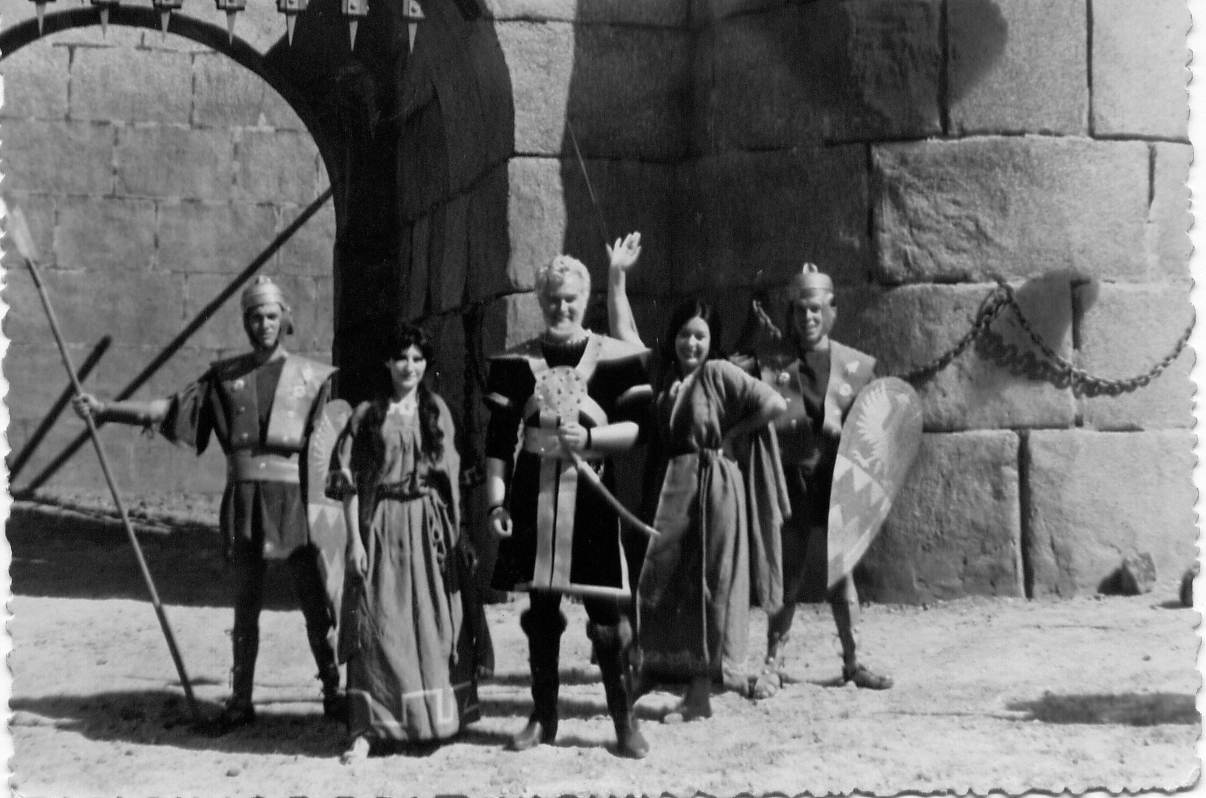
At that time, film productions had already been made in Manzanares El Real, Colás worked as an “extra” in some of them like the other inhabitants of the town, and the bar also brought sandwiches and food to the shoots. Despite the fact that Colás passed the exams to become a firefighter at the Madrid airport, he did not accept the position to be able to help in the bar. In addition, in 1963 his father died and he had to take charge of the business and other family matters. His father had a lot of friends, among them film producers, who came looking for Colás to help them in the film The Fall of the Roman Empire. From that moment he became “the man of the cinema in Manzanares”, as he was known in the cinematographic world.
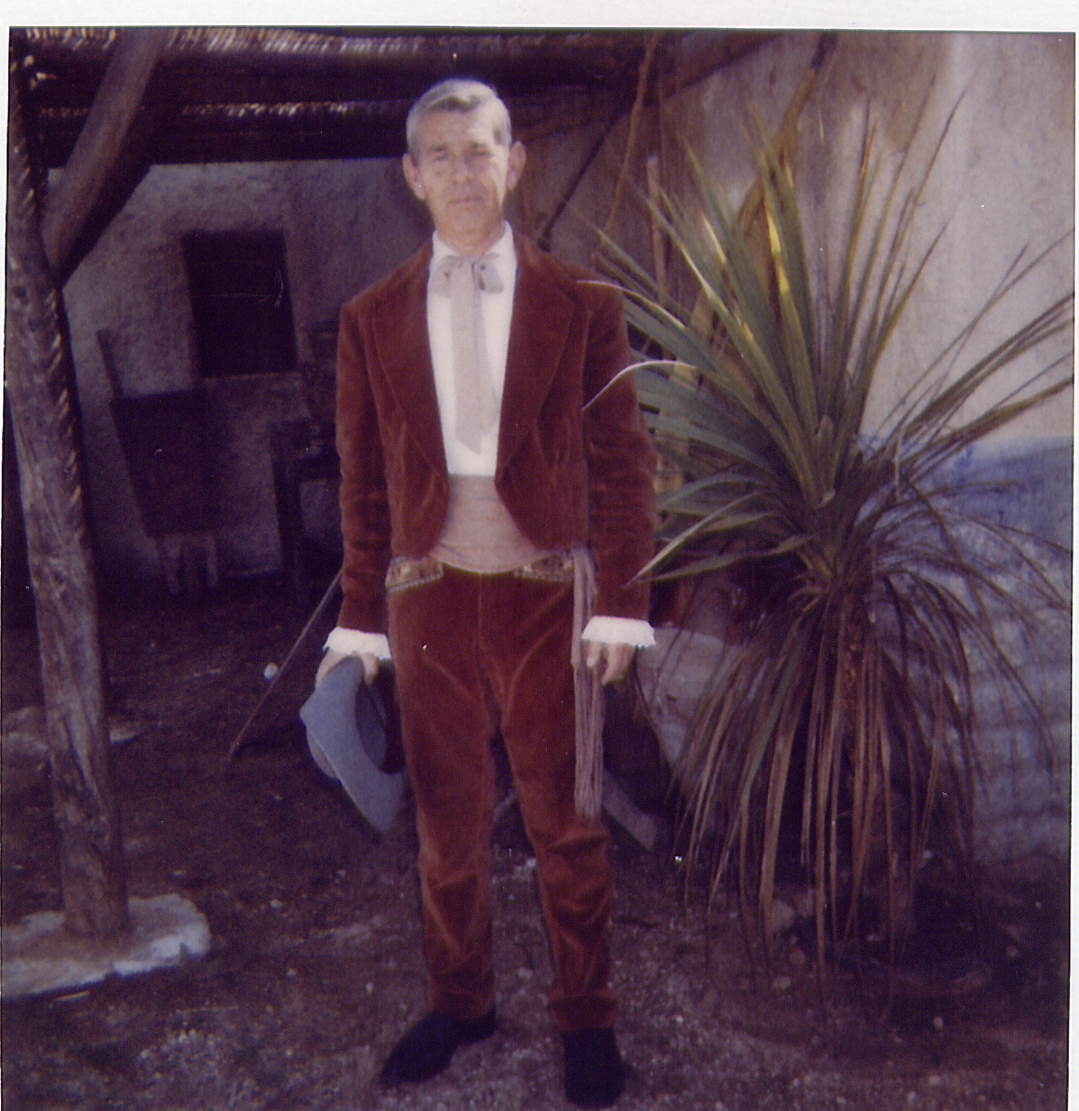
The bar-restaurant became a place of reference, an icon of the town: on weekdays it was filled with workers at lunchtime, and on weekends it became the place of reference for vacationers. Bus tickets were also distributed here (for free, of course). In fact, on a Saint Peter and Saint Paul day in the 1970s, tickets were issued for 29 buses. In the first years of the tavern, the family fixed up a leftover cattle track, next to the bar, and turned it into a pleasant summer terrace that received an award from the “Sección Femenina”. This terrace became the ideal place on summer nights where, many times, the owners left bottles, glasses and ice so that customers could help themselves freely until the wee hours of the morning, while they went to rest. In 1989, Colás was diagnosed with a genetic and incurable disease and he had to leave the bar, which was rented to several people until it was sold in 2004 and the buyer threw it away to build houses.
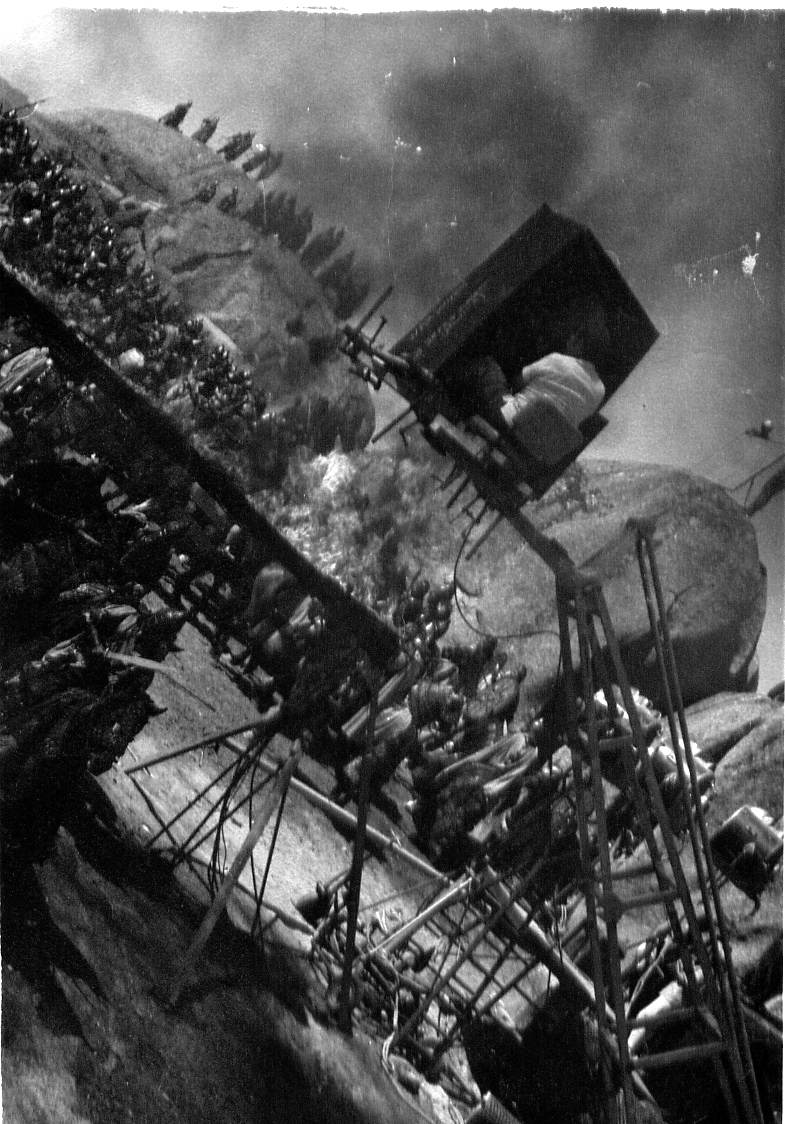
“Cinema” was always Colás’ passion. Since he began with positions of responsibility in 1963, he did not stop until his body could not take it anymore. Everyone who wanted to film in Manzanares El Real turned to him: producers, directors and decorators presented him with his projects, what places they needed, what scenes had to be shot, what landscapes they needed. Colás left everything and went with them to look for those magical places and corners that made them feel that this was his filming location; he hardly needed a day to convince them that they had everything they needed here. And Colás was in charge of preparing everything for them so that they only had to set up the cameras and start shooting: he was in charge of requesting permits from the Cuenca Alta del Manzanares Regional Park, he spoke with the owners of the private lands chosen for filming, he managed rents, managed the rent to be paid per day of filming or for the use of public properties with the City Council, was in charge of hiring (builders, masons, electricians, plumbers, kitchen assistants, caretakers, painters, material warehouses). And, of course, the extras. The bar was filled with people who came to sign up for the movies, because they earned more in a week than in two months of work. Colás always chose the most disadvantaged people, those who had many children, those who were in trouble; he always tried to make sure that everyone had a place and that they earn a little money to be able to get ahead. Salaries varied according to what the extras could offer: in The Fall of the Roman Empire, for example, they charged 50 “pesetas” per day, and 100 “pesetas” if they rode a horse. The children worked as water carriers carrying the water jugs, the women were in charge of carrying, on the backs of donkeys, the mattresses of the beds of their houses to be used as mats for the falls of the fight scenes, mattresses that by the night they had to go back to their houses.
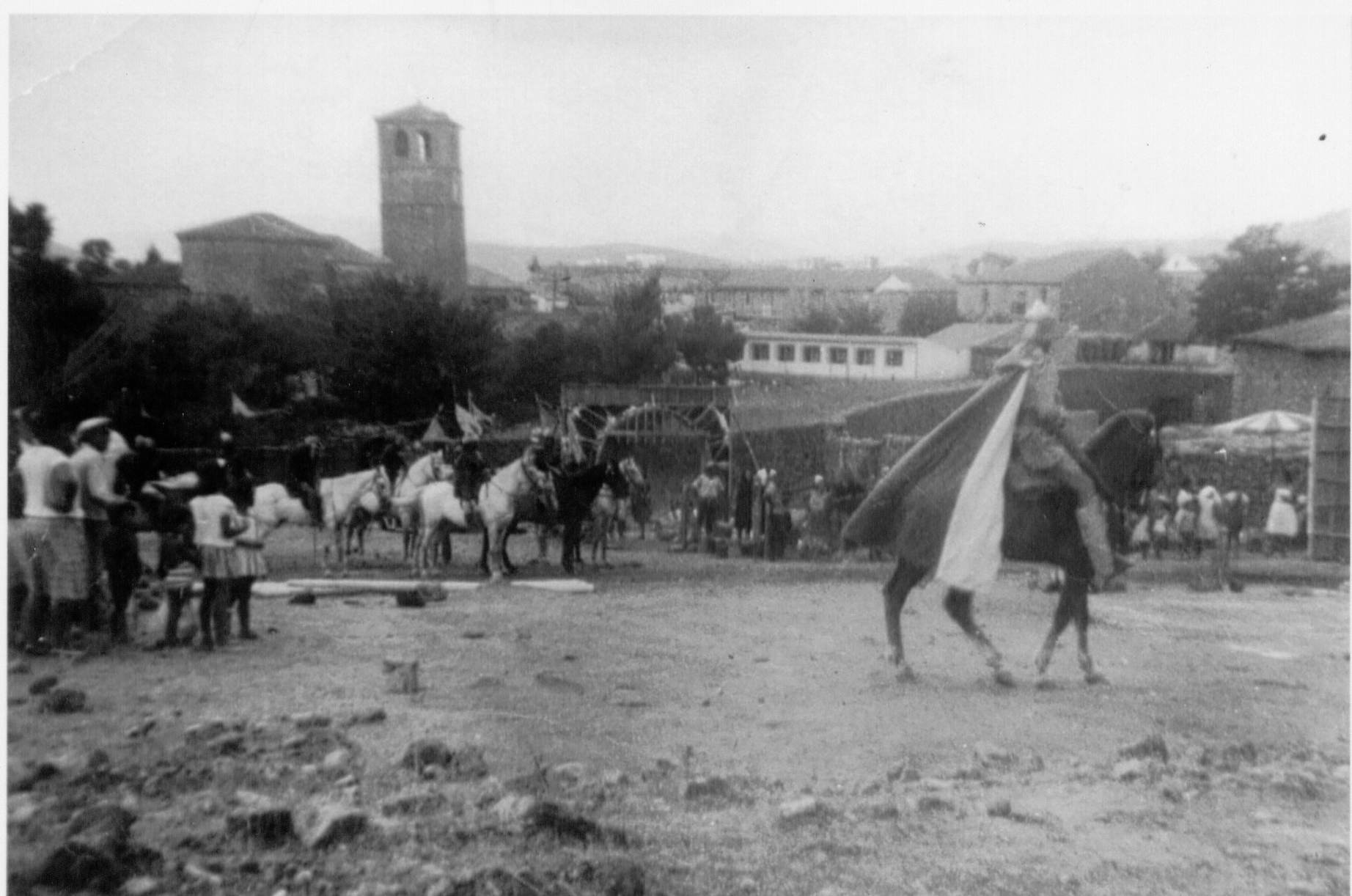
Over the years, much more was charged for filming and the cinema became an important economic injection for the town, weeks and months of exorbitant activity where everyone came out on top.
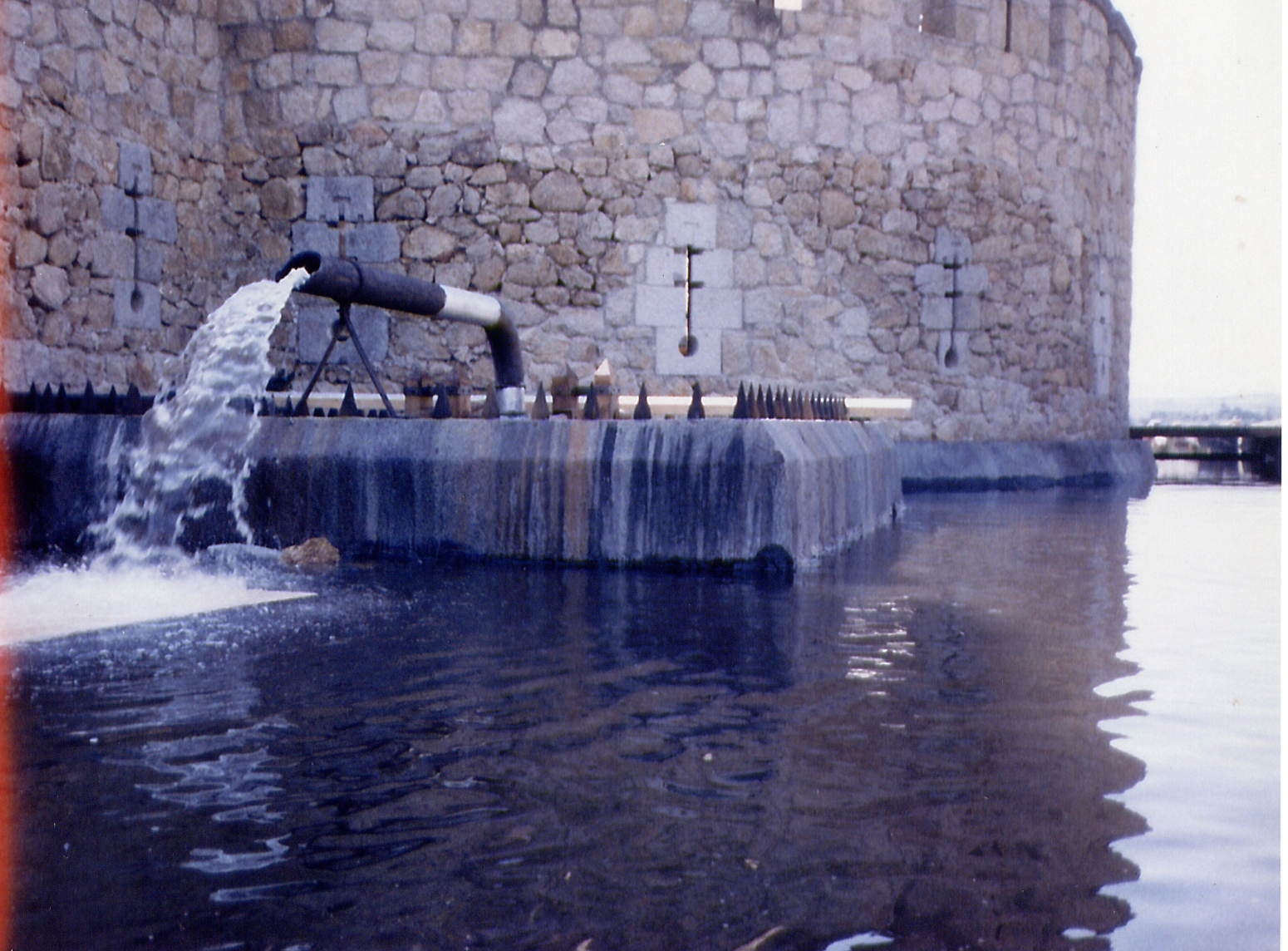
The bar also became everyone’s dining room: several shifts had to be taken for food, because even having two dining rooms was not enough. Sometimes, one of the dining rooms was transformed into dressing rooms and makeup, and producers and all kinds of leading actors, both Spanish and foreign, passed through there, the best decorators in the world such as Gil Parrondo, with three Oscars, who called every day to the United States from the phone in the bar, the best special effects such as Reyes Abades, the best lighting designers, scripts, make-up artists, hairdressers, wardrobe managers. The relationship between all of them was very close and familiar, as happened with Sancho Gracia while Curro Jiménez was being filmed: he was at the bar as if it were his own home, he went into the kitchen to see how the “fabada” beans were being cooked or he got into the bar to serve beer. The same thing happened with the actor Álvaro de Luna or with the Italian producer Sergio Cottona and his wardrobe manager, Elga.
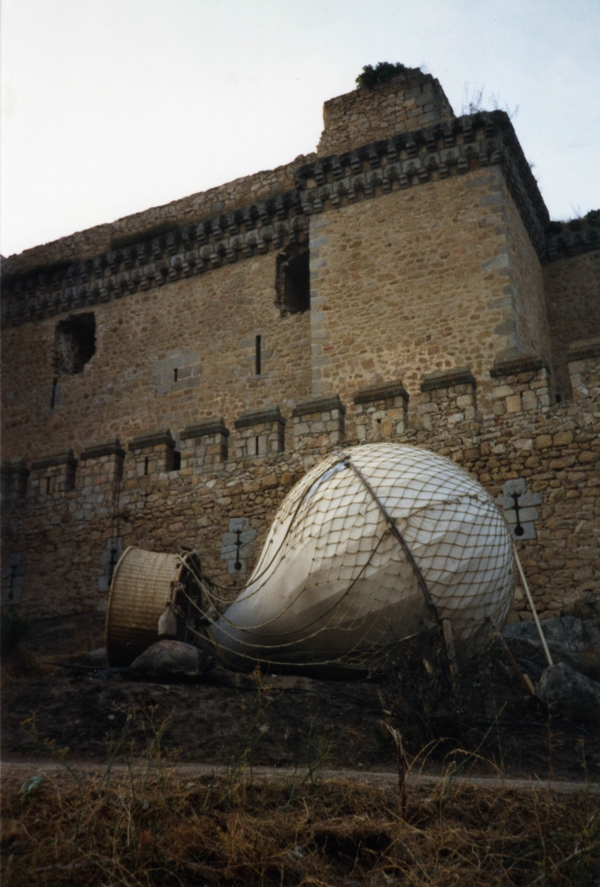
it was good for the town and, above all, for its inhabitants. In fact, he tried to build some Cinema studios so that this occasional income would become more stable, so that families could live on it, but bureaucratic obstacles did not make it possible.
(Memories of María Luisa López and Pilar Luna, wife and daughter of Colás)
If you want to know more about film production in Manzanares El Real, visit our section A Town Out Of A Movie
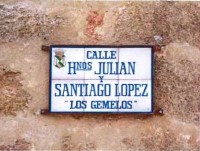
The name of this street honors the brothers Santiago and Julián López Hernández, “The Twins,” who chose our village to live in, create, and share their passion for music through the Rondalla that today bears their name.
A unanimous tribute
During the council session held on February 23, 1994, at 8:00 p.m. in the town hall, it was unanimously agreed by the ten members present to approve the proposal to pay tribute to brothers Julián and Santiago López Hernández —the latter posthumously— by naming this street, formerly known as Calle Las Huertas, after them.
At the inauguration, notable figures from the world of music such as María Dolores Pradera and Nati Mistral attended to accompany Julián, together with members of the rondalla and the townspeople.
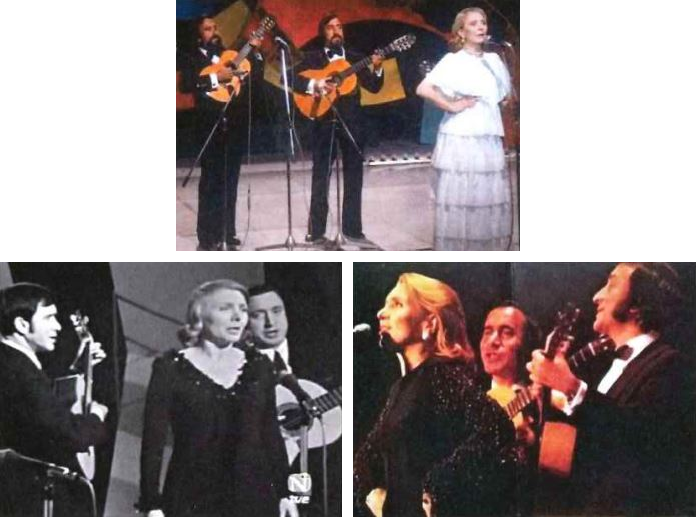
After unveiling the plaque, they celebrated with a meal at El Hotel Parque Real, now a senior residence. Following a menu of cod-stuffed peppers and entrecôte, Nati Mistral began to sing a cappella, soon joined by María Dolores Pradera —together, they created a truly delightful evening.
Su vida
The brothers Santiago and Julián López Hernández were born in Madrid on March 13, 1931, with Julián being fifteen minutes older. Both combined their academic studies with musical training while attending the Complutense University of Madrid. Santiago studied Architecture and Julián Mathematics, disciplines that later led Santiago to work as an architect and teacher, and Julián to serve for forty years at the Ministry of Public Works.
During their university years, they joined the Madrid District “Tuna,” and under Santiago’s direction, in 1958 they made the first vinyl recording ever performed by a tuna group: the famous Clavelitos, though they titled it Dame un clavel. Around that time, they also took part in Coros y Danzas de España, notably touring the United States.
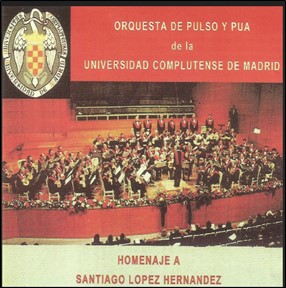
Their tireless musical activity, combined with their professional lives, led them to form, along with other former tunos, the Orquesta de Pulso y Púa de la Universidad Complutense de Madrid, which Santiago conducted until his death. His directing style was remarkable —he didn’t read music, but relied entirely on his ear. Yet the orchestra sounded magnificent!
Over time, the group gained prestige, performing concerts across Spain and abroad, and recording albums such as Guitar Concert – Concierto de Guitarra and Spanish Classic Guitar. They also released an album in tribute to Santiago López, featuring well-known pieces.
In the early 1960s, as Spanish pop was emerging, the twins recorded several singles as a duo with popular songs of the time —La Flor de la Canela, Mustafá, La Galopera, El Gavilán, Day-O (Banana Boat Song), among others.
Julián, a baritone, played the guitar, while Santiago, a tenor, played the requinto —a smaller, higher-pitched guitar ideal for melodic lines that Julián accompanied brilliantly. Together, they created a unique, unmistakable sound with a personality of its own.
In 1965, they recorded their first album with María Dolores Pradera, beginning a collaboration that would last thirty years. As she herself once said:
“We were like three perfectly matched siblings.”
Together, they performed on countless stages around the world, and also accompanied other major artists such as Los HH (Hermanos Hermosos), Nati Mistral, Raphael, and Chavela Vargas.
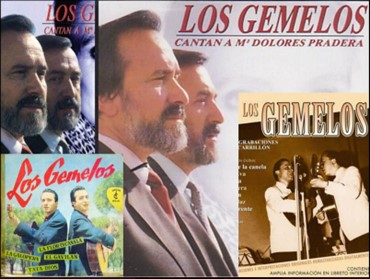
In the 1970s, the twins settled in Manzanares El Real, in the Peña El Gato residential area. Around that time, Santiago’s son celebrated his First Communion, and to mark the occasion, they performed La Misa Criolla by Ariel Ramírez in our village church, playing guitar and singing the solo parts. Shortly after, María Dolores Pradera performed in the old Manzanares El Real cinema—today’s Sala El Rodaje—accompanied by Los Gemelos.
While continuing their professional and artistic careers worldwide, they founded in Manzanares El Real, selflessly, a rondalla where young and old alike gathered on Sunday mornings to learn from the sheet music they shared and taught. The group, directed by Santiago until his passing on August 23, 1993, participated in music festivals across the Community of Madrid.
Medal for Artistic Merit
On November 30, 1993, the Madrid City Council agreed to award Santiago López Hernández the Medal for Artistic Merit in recognition of his distinguished musical career. His brother Julián received it on his behalf, saying:
“It’s sad that tributes come only after death, because my brother dedicated 42 years of his life to music.”
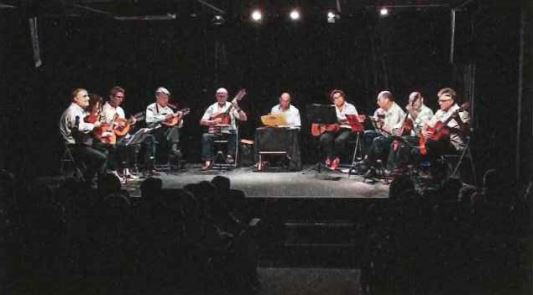
In perpetual recognition of the selfless work carried out by the López Hernández brothers through their rondalla, the Asociación Cultural Rondalla “Los Gemelos” was founded in 1995 and remains active to this day.
Manzanares El Real, September 2022.